

The most expensive furniture piece ever sold is the Badminton Cabinet, which achieved $36.7 million at Christie’s in London in 2004. It remains the standing world record for furniture at auction.
The most expensive furniture pieces ever sold have reached prices exceeding $36 million — figures that dwarf most cars, jewels, and prime real estate. What pushes a chair or cabinet into that territory comes down to four things: who made it, how old it is, what it’s made from, and the story attached to it.
These aren’t just objects. They are financial assets, historical artifacts, and status symbols — often all three at once. That’s what the millions are really paying for.
QUICK HIGHLIGHTS
Highest price ever paid ………. $36.7M — Badminton Cabinet, 2004
Most expensive chair …………. $27.8M — Dragon’s Chair, 2009
Most expensive American piece …. $11.4M — Goddard-Townsend Secretary Desk
Oldest confirmed piece ……….. Ming Dynasty — Huanghuali Armchairs
Table of Contents
Top 10 Most Expensive Furniture Pieces Ever – Prices That Will Shock You (2026)
Quick Overview: World’s Most Expensive Furniture
| Furniture Piece | Price | Origin | Year |
|---|---|---|---|
| Badminton Cabinet | $36.7 Million | Italy | 1726 |
| Dragon’s Chair | $27.8 Million | France | 1917–1919 |
| Florentine Pietra Dura Cabinet | $24.3 Million | Italy | 1720–1732 |
| Antique Secretary Desk | $11.4 Million | USA | 1760s |
| Huanghuali Armchairs | $9.6 Million | China | 17th Century |
| Clive of India Sofa | $7.8 Million | India | 1767 |
| Harrington Commode | $5 Million | England | 1770 |
| Tufft Table | $4.6 Million | USA | 1775–1776 |
| George II Padauk Cabinet | $3.9 Million | England | 1755–1760 |
| Magnetic Floating Bed | $1.6 Million | Netherlands | Modern |
1. The Badminton Cabinet — $36.7 Million
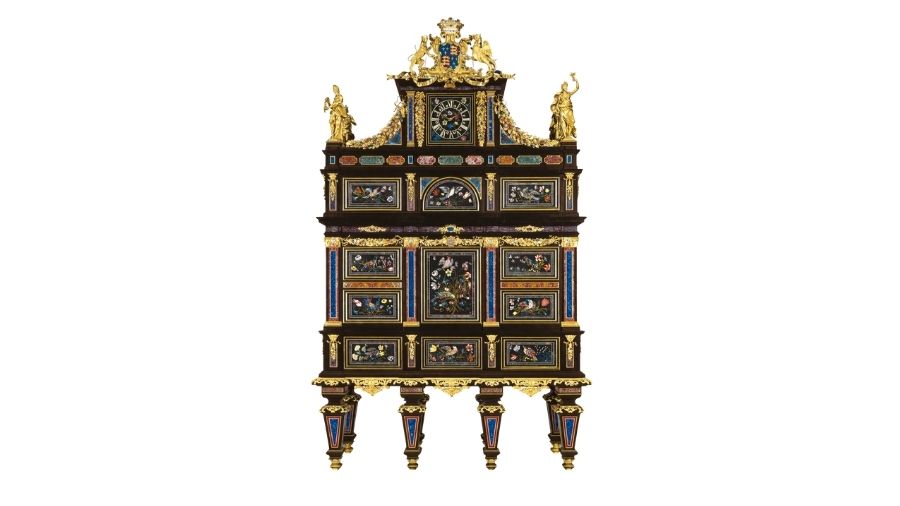
World auction record — furniture Christie’s, London, December 2004 Sold by Prince Hans-Adam II of Liechtenstein
Origin: Florence, Italy
Made: c. 1726–1732
Commissioner: Henry Somerset, 3rd Duke of Beaufort
Key materials: Pietra dura, agate, chalcedony, ebony
The Badminton Cabinet is the most expensive piece of furniture ever sold at public auction — a title it has held since Christie’s hammered it down in December 2004, with nothing since coming close to that number.
It was commissioned by Henry Somerset, 3rd Duke of Beaufort, from the Grand Ducal Workshops in Florence around 1726, and the work ran until 1732. Thirty craftsmen spent those six years on a single object: a cabinet of ebony and rare hardstones, every surface encrusted with pietra dura panels — a painstaking Florentine technique where thin slices of semiprecious stone are cut, fitted, and polished into a continuous surface. The stones included agate, lapis lazuli, and chalcedony, chosen with the same care a painter would apply to colour.
Three centuries after it was made, it is still the first piece any auction specialist names whenthe subject of valuable furniture comes up.


2. The Dragon’s Chair — $27.8 Million
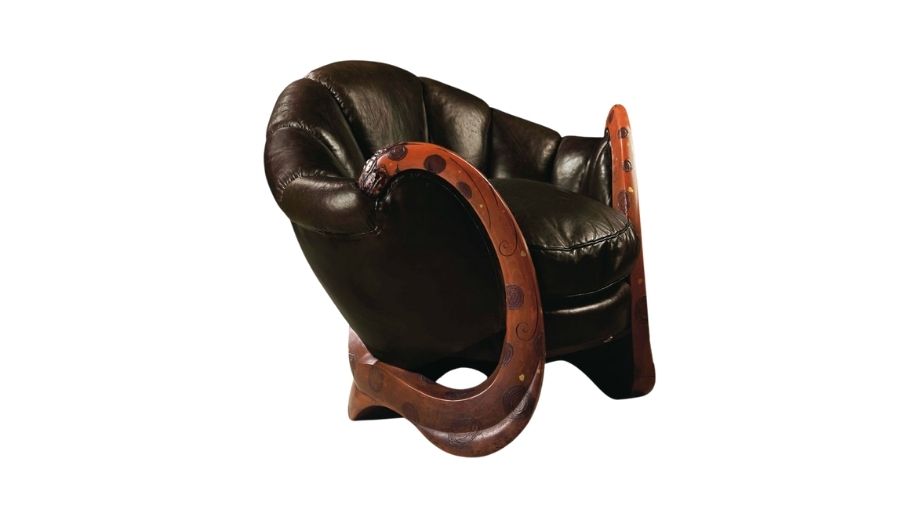
Most expensive chair ever sold Christie’s, 2009 Eileen Gray, 1917–1919
Designer: Eileen Gray
Made: 1917–1919
First owner: Suzanne Talbot
Key materials: Hand-sculpted hardwood, no machine forming
Not every record-breaking piece is centuries old. The Dragon’s Chair was made between 1917 and 1919 by Eileen Gray, the Irish-born architect and designer whose reputation has only grown since her death in 1976. Christie’s sold it in 2009 for $27.8 million, making it the most expensive chair ever sold at auction.
Gray’s first significant patron was the Parisian socialite Suzanne Talbot, who commissioned several lacquer pieces and this chair during the same period. The carved form — serpentine,deliberately asymmetric, with none of the expected decorative vocabulary of its era — was shaped entirely by hand. No machining, no template. The result is something that reads as both archaic
and completely modern depending on the angle, which may explain why it drew serious collectors for the better part of a century before its auction result made headlines.
3. The Florentine Pietra Dura Cabinet — $24.3 Million
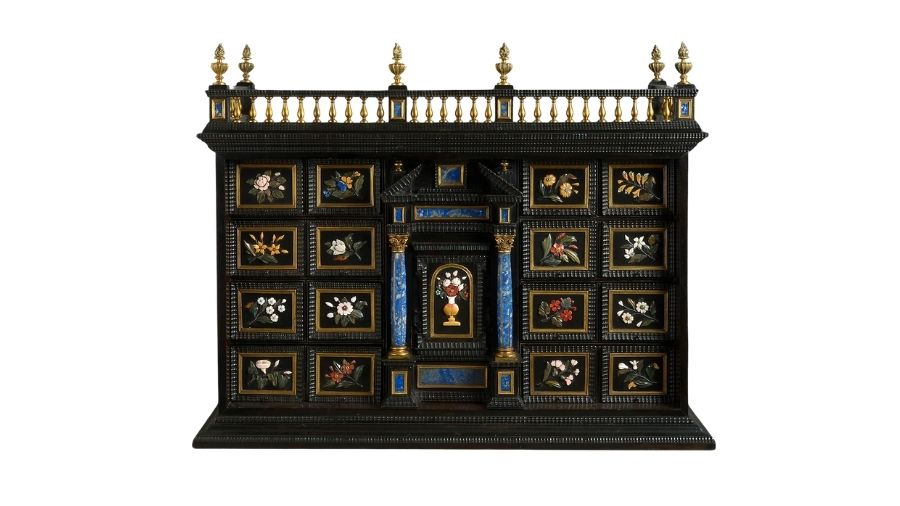
High Baroque masterwork Christie’s, London, December 8, 2004
Origin: Grand Ducal Workshops, Florence
Made: c. 1720–1732
Commissioner: Henry Somerset, 3rd Duke of Beaufort
Key materials: Pietra dura inlay, cedar, gilded bronze
The third most expensive furniture piece in the world sold at the same Christie’s sale as the first — December 8, 2004, London. It was a remarkable morning for the antique furniture market.
Like the Badminton Cabinet, this piece was commissioned by Henry Somerset, 3rd Duke of Beaufort, from the Grand Ducal Workshops in Florence, and the two were almost certainly conceived as companion pieces. The interior is cedar-lined, its drawers framed by intricately inlaid scenes of birds, flowers, and allegorical figures in the high Baroque manner.
The gilded bronze mounts are equally accomplished. At $24.3 million, it stands as a reminder that early 18th-century Florence produced work that collectors are still paying an extraordinary premium for, three
centuries on.
4. The Goddard-Townsend Secretary Desk — $11.4 Million
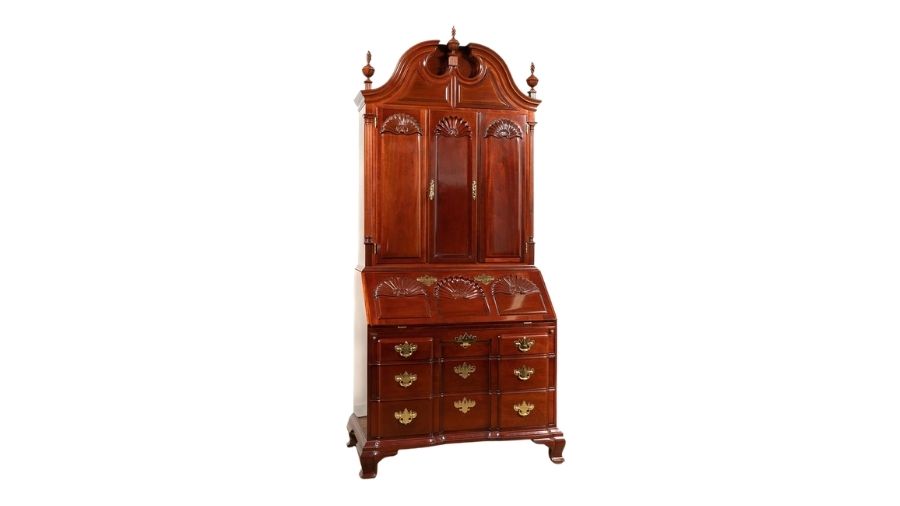
The pinnacle of colonial American furniture Christie’s, 1989 Newport, Rhode Island, c. 1760s
Makers: Goddard & Townsend families
Origin: Newport, Rhode Island
Made: c. 1760s
Key materials: Mahogany, block-and-shell carving
American furniture rarely enters the same conversation as Florentine masterpieces, but this desk belongs there. Made in Newport, Rhode Island, during the 1760s by craftsmen from the Goddard and Townsend families — the two most celebrated cabinetmaking dynasties in colonial America — it sold at Christie’s in 1989 for $11.4 million.
Only nine desks of this specific form are known to exist. That figure alone goes a long way toward explaining the price. The block-and-shell carved front is the signature move of the Newport school: a rhythmic alternation of convex and concave blocking topped by carved shells, a motif that the Goddard and Townsend families essentially owned. It remains the highest price ever paid for a piece of American colonial furniture.
5. Huanghuali Horseshoe-back Armchair — ~$9.6 Million
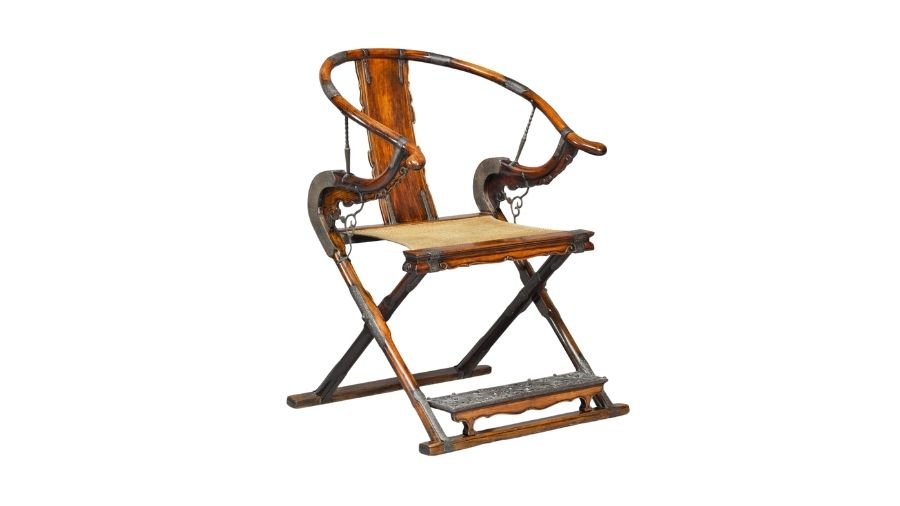
Ming Dynasty — most coveted Chinese furniture [UNVERIFIED — sale details not publicly confirmed]
Period: Ming Dynasty, 17th century
Origin: China
Key materials: Old-growth huanghuali (yellow flowering pear)
Joinery: Mortise and tenon — no nails
Huanghuali — yellow flowering pear wood, native to China’s Hainan Island — was already becoming scarce before the Ming Dynasty ended in the 17th century. Today, old-growth huanghuali is effectively unobtainable. Finding a single piece of furniture made from it in good condition is uncommon. Finding a matched pair of horseshoe-back armchairs is almost unheard of.
The curved, continuous form of the horseshoe back is among the most technically demanding achievements in the history of woodworking. These chairs are held together entirely by precision-fitted mortise and tenon joints — no nails, no adhesive — and the structure has survived four centuries. At an estimated $9.6 million, they represent the apex of Ming Dynasty cabinetmaking.
[NOTE: The specific auction house and sale year are not confirmed in publicly available records. The valuation is an estimate based on comparable sales. Treat the figure as indicative rather than a verified auction result.]
6. The Clive Of India Sofa — ~$7.8 Million
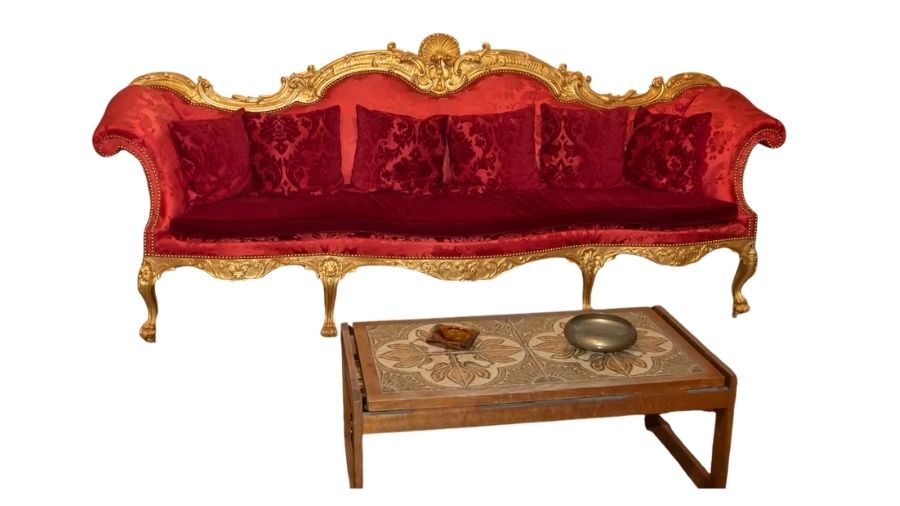
Anglo-Indian Colonial Baroque [UNVERIFIED — valuation, not confirmed auction record]
Made: c. 1767, India
Original owner: Robert Clive (Clive of India)
Style: Anglo-Indian Colonial Baroque
Key materials: Teak, ivory inlay, silk upholstery
Some furniture is expensive because of who made it. This sofa is expensive because of who owned it. Robert Clive — known to history as Clive of India — was the British officer whose campaigns in the 1750s and 1760s established British dominance over much of the Indian subcontinent. He remains a deeply controversial figure; the wealth he accumulated in India was enormous, and this
object is a product of that world.
Made in India around 1767, the sofa blends a European silhouette with Indian craftsmanship: teak frame, ivory inlay, a form that would have read as English to a London eye but was built entirely by Indian hands in an Indian workshop. Its $7.8 million valuation is driven almost entirely by documented ownership history. The object is remarkable; the name attached to it is what commands the price.
[NOTE: This piece is more frequently cited as a private valuation than a documented public auction result. Specific sale details are not fully transparent. Treat the figure as an
estimate.]
7. The Harrington Commode — $5.0 Million
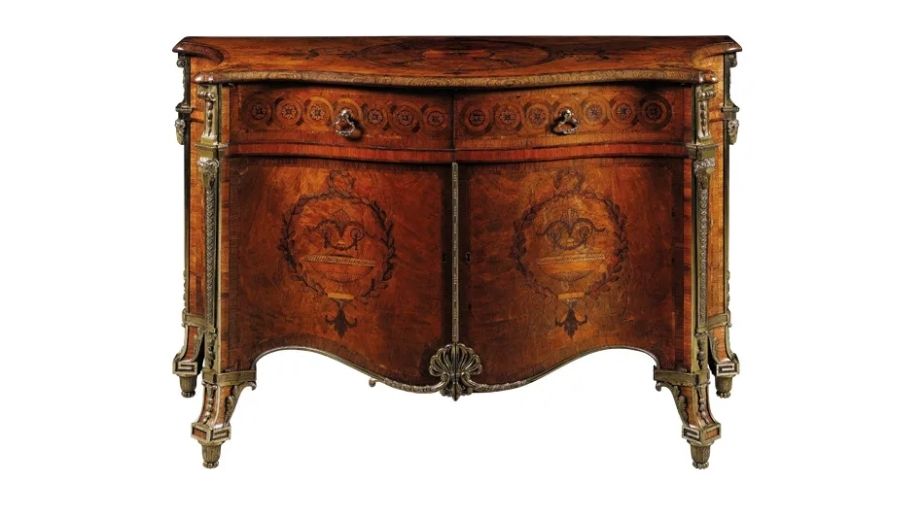
Chippendale at the peak of his career Sotheby’s, 2010 England, c. 1770
Maker: Thomas Chippendale (attributed)
Origin: England
Made: c. 1770
Key materials: Marquetry inlay, gilded ormolu mounts
Thomas Chippendale is the name most closely associated with museum-quality English furniture, and the Harrington Commode is a strong argument for why that reputation holds. Made around 1770 and sold at Sotheby’s in 2010 for $5 million, it represents what many specialists consider Chippendale’s workshop at its most accomplished.
Every surface carries marquetry — intricate decorative inlay assembled from different veneers — and the ormolu bronze mounts are among the finest examples associated with his name. Chippendale’s range was remarkable: this commode could barely look less like the padauk cabinet further down this list, yet both carry his attribution. That versatility across materials and styles is part of what makes pieces from his workshop so persistently valuable at auction.
8. The Tufft Table — $4.6 Million
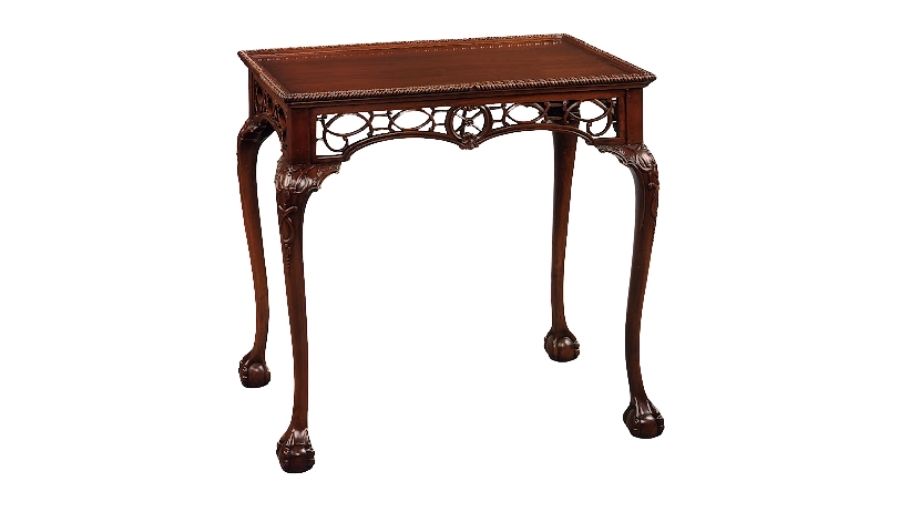
American Rococo — Philadelphia school Christie’s, January 1990 The Tufft Table — $4.6 Million Thomas Tufft, Philadelphia, 1775–1776
Maker: Thomas Tufft
Origin: Philadelphia
Made: 1775–1776
First owner: Richard Edwards, Lumberton
Philadelphia in the 1770s was producing some of the finest furniture in the American colonies, and Thomas Tufft was near the centre of it. His work in the American Rococo style was technically demanding and visually sophisticated — the Tufft Table, made between 1775 and 1776, is the clearest surviving example of why serious collectors have pursued his pieces across generations.
Its features read like a checklist of the Philadelphia Rococo at its best: hand-pierced fretwork apron, ball-and-claw feet, long slender legs that somehow manage to look both delicate and load-bearing at the same time. Originally owned by Richard Edwards of Lumberton, it passed through collectors’ hands for more than two centuries before selling at Christie’s in January 1990 for $4.6 million.
9. George II Parcel Gilt Padauk Cabinet — $3.9 Million
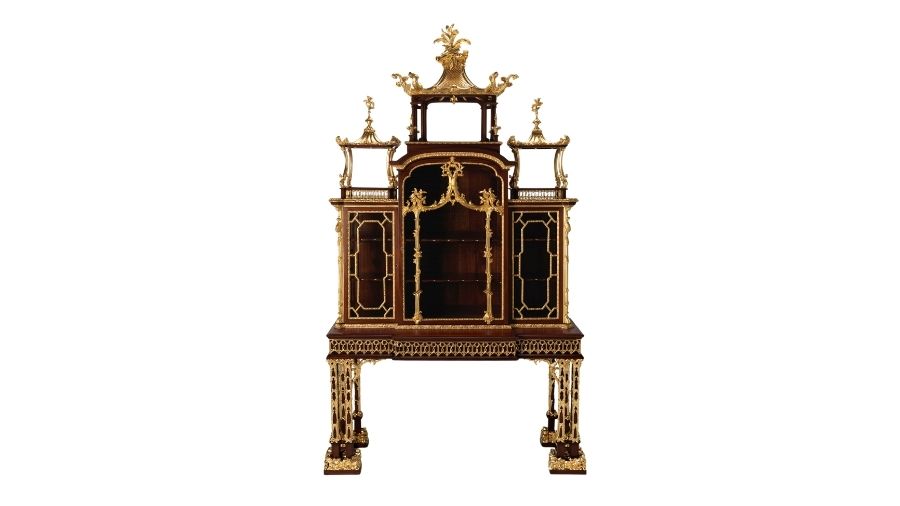
The rarest wood in English furniture Christie’s, London, 2008 c. 1755–1760
Maker: Chippendale workshop (attributed)
Made: c. 1755–1760
Key materials: Southeast Asian padauk, parcel gilding
Sold: Christie’s London, 2008
Padauk — a deep, warm red hardwood from Southeast Asia — was an exotic choice in 18th-century England, and that rarity is a significant part of what sets this cabinet apart. Made between 1755 and 1760 and attributed to Chippendale’s workshop, it sold at Christie’s London in 2008 for $3.9 million.
The contrast between the richly coloured wood and the gilded details gives the piece a visual weight that photographs don’t fully capture. Looking at it alongside the Harrington Commode — made by the same workshop within a decade — the two pieces look almost nothing alike. That range across materials and aesthetic registers is one reason why Chippendale attributions carry such consistent premiums in the saleroom.
10. The Ruijssenaars Magnetic Floating Bed — $1.6 Million
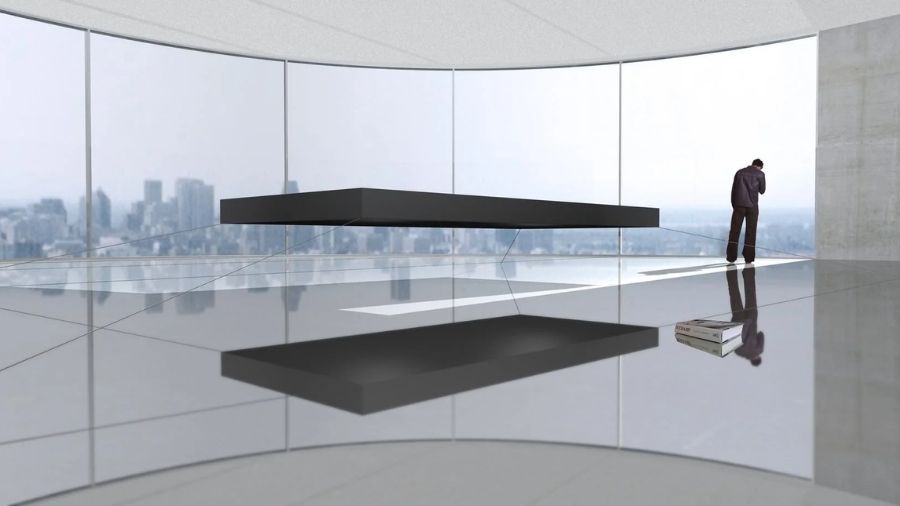
Contemporary — commission price, not auction record Listed commission price Janjaap Ruijssenaars
Designer: Janjaap Ruijssenaars
Development: Six years with Bakker Magnetics
Capacity: Supports up to 680 kg
Key materials: Structural magnet array, platform frame
Every list needs one piece that seems to have arrived from a different century. The $1.6 million figure for the Ruijssenaars Floating Bed is not an auction result — it is what Dutch architect Janjaap Ruijssenaars charges to commission one. No hammer price, no bidding war. You engage him, and he builds it.
Working with the engineering firm Bakker Magnetics over six years, Ruijssenaars developed a bed that levitates permanently using powerful repelling magnets embedded in both the bed frame and the floor platform beneath it. It holds up to 680 kilograms and doesn’t drift or wobble. It just floats. As a technical object it is genuinely extraordinary; as furniture it sits in a different category from everything else on this list, which is exactly why it belongs here.
What Drives Furniture Prices At Auction
Not every beautiful antique sells for millions. The gap between a $500,000 result and a
$36 million one comes down to a specific set of forces that specialists understand well — and that any serious buyer should too.
Documented ownership history is the single most powerful driver. A piece with a clear, unbroken chain of ownership — from the original commissioner through every subsequent sale — commands a premium that condition alone cannot replicate.
The Badminton Cabinet’s record was partly a consequence of impeccable documentation spanning nearly three centuries. A comparable piece with gaps in its history would sell for significantly less, regardless of quality.
Collector competition amplifies prices dramatically. When two serious buyers want the same object, the bidding can push a lot far beyond its pre-sale estimate. The Dragon’s Chair was conservatively estimated before its 2009 sale and ended up at nearly $28 million because multiple well-resourced bidders were chasing something irreplaceable.
Museum demand has become an increasingly important factor. The V&A, the Getty, the Metropolitan — major institutions actively acquire significant furniture, and their presence in a saleroom raises both prices and the cultural legitimacy of the pieces they’re after.
And then there is simple rarity meeting rising demand. There are no new Ming Dynasty armchairs being made. As the buyer pool has expanded globally over the past three decades, supply has stayed fixed. That imbalance isn’t going anywhere.
Luxury Furniture As An Investment Asset
Museum-quality antique furniture from verifiable makers has consistently held and grown in value over time. The Dragon’s Chair changed hands multiple times across a century. The Badminton Cabinet built value across generations before its 2004 result. Pieces like the Tufft Table and the Padauk Cabinet have held through market cycles that hurt other asset classes badly.
Three things underpin appreciation here. Limited surviving examples are primary — when only nine of a form exist, there is no mechanism for prices to correct downward. Maker attribution is second — names like Chippendale, Eileen Gray, and Goddard and Townsend carry weight with collectors worldwide and show no sign of losing it.
Condition is third — museum-quality pieces require specialist conservation, not restoration. The distinction matters enormously to buyers, and to values.
One caution worth stating plainly: this market is illiquid. You cannot exit quickly. Serious
collectors work with specialist advisors and keep relationships with the major auction houses, whose records are the only real reference point for current valuations. Buying furniture as a financial instrument without that expertise and patience takes on more risk than most buyers realise until it’s too late.
Sourcing High-value Furniture Internationally
Buying through Christie’s or Sotheby’s is the most straightforward route to fully documented ownership history, but it isn’t the only one. Specialist dealers in London’s Mayfair and St. James’s, in Paris, and in Florence have long been reliable alternatives for European antiques, though their pricing reflects their own acquisition costs.
For Chinese antiques, the Hong Kong sales at both Christie’s and Sotheby’s are where serious buyers go — the depth of specialist knowledge and quality of material that passes through those rooms is unmatched outside mainland China.
Anyone importing furniture made from protected species needs to be across CITES regulations before a shipment moves. Several woods on this list — huanghuali and padauk among them — are subject to trade controls under the Convention on International Trade in Endangered Species.
Antique pieces predating the relevant CITES listing dates can be legally traded, but only with the correct pre-convention certificates. Without the right paperwork, a shipment can be seized at customs regardless of what it’s worth. This is not an area where you improvise — get a specialist trade compliance advisor involved before anything crosses a border.
For high-value pieces, logistics should go through specialist art shipping companies: climate- controlled transport, custom crating, insurance calibrated to appraised value rather than shipping weight. [See: international furniture shipping and import guide]
Working With Us
Kellso UAE supplies premium hospitality furniture, including banquet tables and live cooking stations, with factories in UAE, Indonesia & China. For collectors and businesses sourcing high-value or custom luxury furniture internationally, the difference between a smooth acquisition and a seized shipment usually comes down to who you work with.
Experienced logistics and sourcing partners handle authentication documentation, CITES compliance, customs classification, and specialist transit — so the piece arrives as it left.
If you’re sourcing investment-grade antiques, bespoke hospitality pieces, or premium custom furniture for a villa, resort, or commercial property, get in touch to discuss what your project requires.
Sources & Editorial Note
Auction prices sourced from Christie’s and Sotheby’s published sale records. Entries 5 and 6 (the Huanghuali Armchairs and the Clive of India Sofa) are estimates based on reported valuations; specific auction details are not publicly confirmed and are flagged throughout. The Ruijssenaars Floating Bed figure is a listed commission price, not an auction result.
Frequently Asked Questions
Q: What is the most expensive piece of furniture ever sold?
A: The Badminton Cabinet, sold at Christie’s London in December 2004 for $36.7 million by Prince Hans-Adam II of Liechtenstein. That figure remains the standing auction record for any piece of furniture.
Q: Why is antique furniture so expensive?
A: High prices reflect factors that cannot be replicated: age, condition, the reputation of the maker, the rarity of materials, and a documented ownership history. The fewer examples that exist, the higher the price. The Goddard-Townsend desk commands millions partly because only nine of its specific form are known to survive.
Q: Which wood is most valuable in furniture?
A: Huanghuali is widely considered the most coveted wood in the antique furniture market. Native to China’s Hainan Island, it was already scarce by the 17th century and is now effectively unobtainable in old-growth form. Other highly valued woods include padauk, ebony, and aged teak. Several are CITES-regulated, which affects how antique pieces can be legally traded across borders.
Q: How to invest in antique furniture?
A: Start with documented pieces from verified makers — Chippendale, Eileen Gray, Goddard and Townsend are names that have held value across generations. Condition reports and unbroken ownership records are non-negotiable. Most serious collectors build relationships with specialist advisors and the major auction houses. Expect to hold for years, not months.
Q: Which furniture increases in value over time?
A: Pieces with documented maker attribution, extremely limited surviving examples, museum-quality condition, and clear ownership history have the strongest track record. Irreplaceability is the common thread. Age alone isn’t enough — maker and condition determine whether an antique holds its value or doesn’t.
Q: Is investing in luxury furniture worth it?
A: It can be, but it demands expertise and patience. The market is illiquid, condition matters above almost everything else, and ownership documentation is non-negotiable. Anyone expecting a quick exit should look at other asset classes.
Q: What do museum-quality antiques typically cost?
A: Pieces from recognised makers with strong documentation tend to start in the $500,000 to $2 million range at major auction houses. Investment-grade works with ultra-rare materials regularly go above $5 million. The figures on this list are the absolute ceiling of the global market.
Q: Where to buy rare antique furniture?
A: Christie’s and Sotheby’s both run dedicated furniture sales with full documentation and condition reports. Specialist dealers in London’s Mayfair and St. James’s, Paris, and
Florence are established alternatives. For Chinese antiques, the Hong Kong salerooms at both houses are the primary market. Verify ownership history and ask for condition reports before committing to any purchase.
Q: How do I import antique furniture internationally?
A: International shipments involve customs classification, material compliance for CITES- regulated species, import duty assessment, and specialist logistics. For pieces made from protected woods, pre-convention certificates are essential; without them, shipments can be seized regardless of value. Use a freight forwarder experienced in fine art and antiques, and make sure transit insurance reflects the appraised value of the piece.